
Most of the pool tables sold in North America are made in China, and China has the largest factories and the widest catalogues. Buyers who add a Vietnamese factory are usually not replacing China; they are adding a second source. This is a checklist for comparing the two fairly. I run a factory in Vietnam, so read it with that in mind, and use it on us as well.
1. Compare landed cost, not FOB price
The FOB price is only the start. For each quote, add:
- Ocean freight from the port of loading to your port.
- Duty on that country of origin at the date you import. Billiard tables are classified under HS heading 9504.20, and the additional duties on Chinese-origin and Vietnamese-origin goods have both changed several times since 2025. Get the current rates from your customs broker on the day you compare.
- Inland freight, warehousing and installation.
- The cost of a bad batch: replacement, returns and lost customers.
A table that is cheaper at FOB can be more expensive delivered.
2. Compare the build line by line
Ask both factories for the same specification in writing:
| Item | What to ask |
|---|---|
| Slate | Thickness (25 or 30 mm), pieces, origin |
| Frame | Plywood, MDF or steel; beam size |
| Rails | Hardwood or MDF core; laminate or solid wood |
| Cushions | Brand and profile, e.g. Premier K55 |
| Cloth | Brand and grade |
| Finish | Primer and PU coats, colour match |
| Warranty | Years, on what parts, who pays freight on spares |
Two tables that look the same in a photo can differ in every row of that table.
3. Check consistency, not just the sample
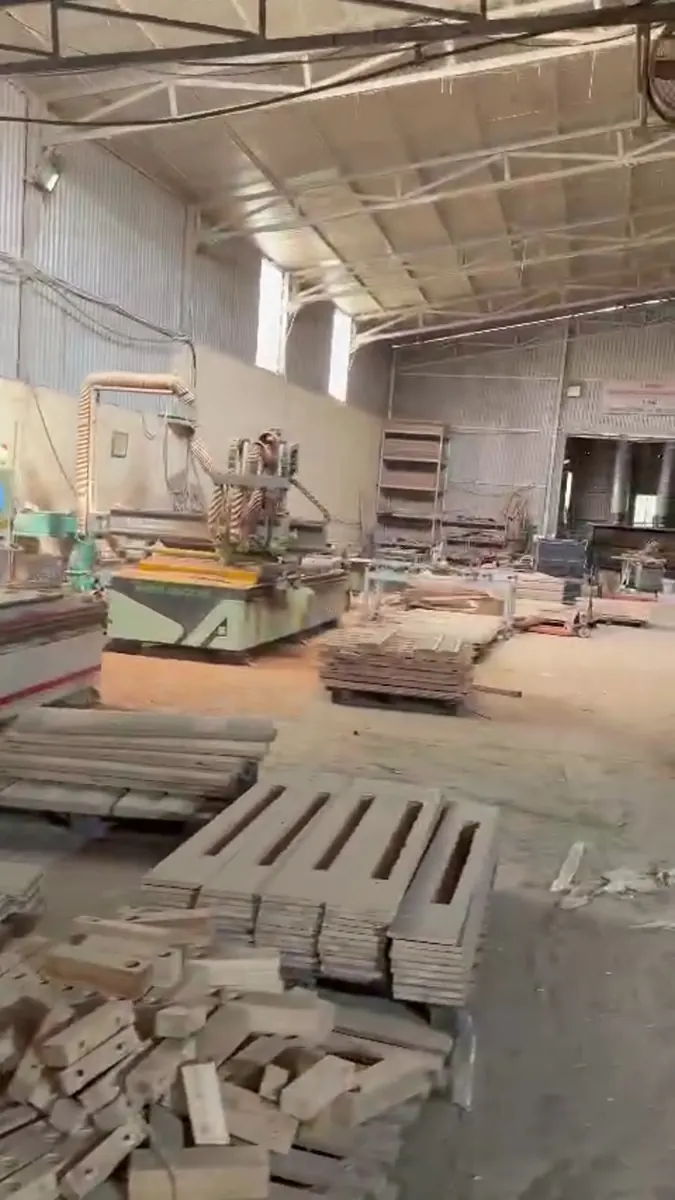
Any factory can build one good sample. What you need is table 400 to match table 1. Ask how parts are cut (CNC from one program, or by hand), where QC happens, and whether every table is laid and levelled before packing. Ask for photos of tables from a recent run, not the showroom.
4. Who are you dealing with?
Large Chinese exporters have English-speaking sales teams and big catalogues. A smaller factory usually means you talk to the owner, but you should check capacity: can they make your volume every month? Ask for floor area, monthly output and current lead time. Ours are 2,000 m², about 300 tables a month and 10–30 days from deposit.
5. Documents and compliance
- Certificate of origin in the form your broker needs.
- ISPM 15 treatment on all crating timber.
- Carton markings and labels in the format your warehouse or marketplace requires.
6. Visit, or have someone visit
A day on the factory floor tells you more than a month of emails. Our factory is under an hour from Hanoi airport. If you cannot travel, ask for a live video walk-through of the floor on a working day.
Summary checklist
- Landed cost per table from both sources, with current duty rates from your broker.
- Same written specification from both.
- Evidence of consistency across a run.
- Capacity and lead time in writing.
- Documents your broker needs.
- A visit or live video tour.
See our factory in Vietnam or send your specification for a quote you can compare.
Quick answers
Are pool tables made in Vietnam cheaper than China?
Not automatically. Compare landed cost, including freight and the duty on each origin at the time you import, not just FOB price.
What HS code are pool tables imported under?
Billiard tables and accessories fall under HS heading 9504.20. Ask your customs broker for the exact subheading and current duty.