

The tables are the one purchase in a pool hall that customers judge every single game. Lighting, bar and décor can be changed later; a hall full of tables that roll off is a hall people stop coming back to. This guide covers the decisions a new owner has to make about tables, in the order you should make them.
I run a billiard table factory, and our own brands, King Billiards and KingKong Billiards, fit out pool halls across Vietnam. What follows is what those owners ask us, and what we tell them.
1. Start from the floor, not the budget
The number of tables you can run is set by the room. Each table needs its playing surface plus a cue's length of clear space around it, so a player can take a shot from any rail without hitting a wall, a column or the next player.
The calculation is simple. Take the playfield and add a standard 58 in (147 cm) cue on each side:
| Table | Playfield | Floor needed (one table, 58 in cue) |
|---|---|---|
| 7 ft | about 198 × 99 cm (78 × 39 in) | about 4.9 × 3.9 m (16 × 12.9 ft) |
| 8 ft | about 224 × 112 cm (88 × 44 in) | about 5.2 × 4.1 m (17 × 13.3 ft) |
| 9 ft | 254 × 127 cm (100 × 50 in) | about 5.5 × 4.2 m (18 × 13.8 ft) |
Tables side by side share the clearance between them, so ten tables do not need ten times the floor of one. Mark columns, doors, the bar and walkways on the plan first; the space left over decides the count. When owners send us a floor plan, we draw the table layout on it before we quote.
2. Decide the mix of sizes
Most halls run 9 ft tables for league and serious players and a few 7 or 8 ft tables near the bar for casual groups. The 9 ft tables are where your regulars play and where tournaments are held. The smaller tables turn over faster and fit corners a 9 ft table cannot.
Planning guides for the US market typically assume 10 to 20 tables for a hall, and smaller rooms often start with fewer. Decide the mix before you ask for quotes, because the price per table depends on it.
3. Know what a commercial table should have
- Slate bed. Three-piece slate, 25 mm minimum; 30 mm on tournament tables. Anything else will not stay level under commercial use. See why slate matters.
- Frame mass. Players lean and sit on rails. A steel-bonded or welded steel frame keeps the table from shifting.
- Cushions. A known rubber such as Premier K55, bonded properly, so rebound is the same on every rail and every table.
- Cloth. Worsted competition cloth plays faster and lasts longer than napped cloth.
- Levelling. Adjusters on each leg save hours when the floor is not flat.
- Consistency. Every table in the hall should play the same. That comes from parts cut on one program, not hand-built one-offs.
4. Budget for the tables
Published estimates put commercial-grade tables at roughly $3,000 to $10,000 per table at US retail, depending on brand and build. Add delivery, installation and accessories (balls, cues, racks, brushes) for every table.
Buying ten or more tables changes the maths. At that volume you can buy direct from a factory instead of a dealer, put your club's name on the tables, and keep the same model available for your next room. The trade-off is that you deal with ocean freight, import and installation yourself, or through a local installer.
5. Plan delivery and installation
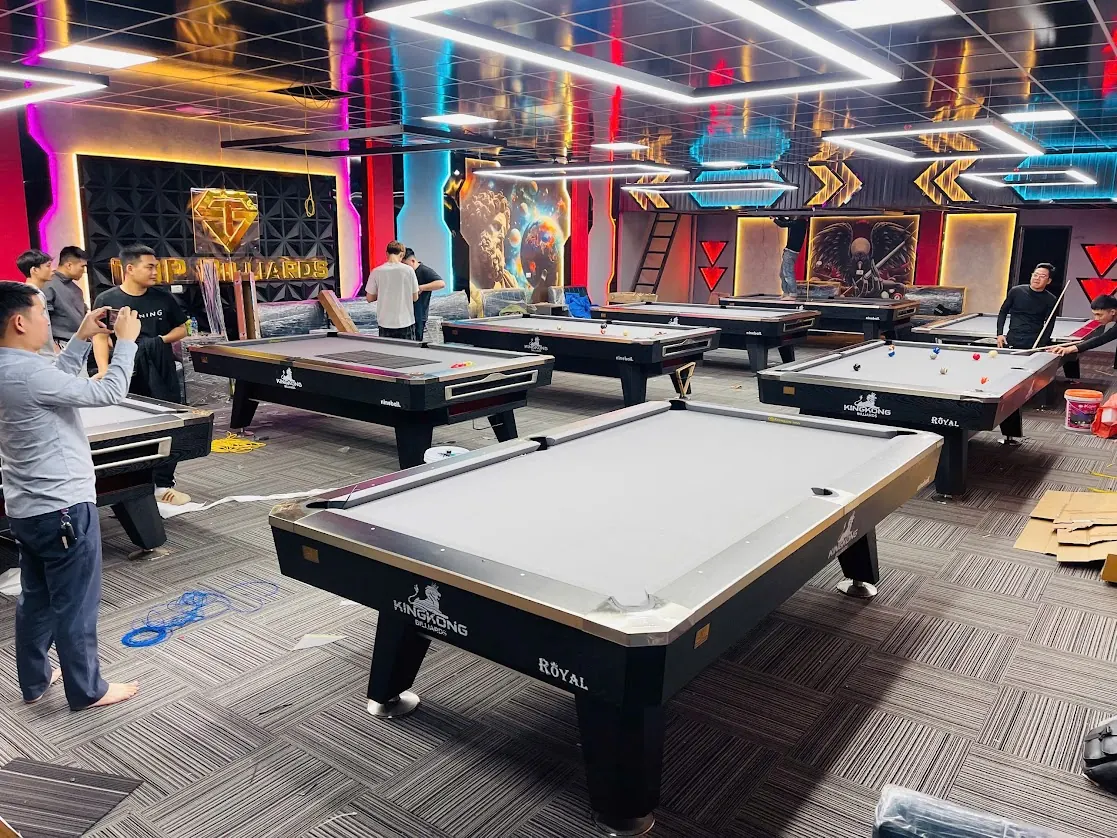
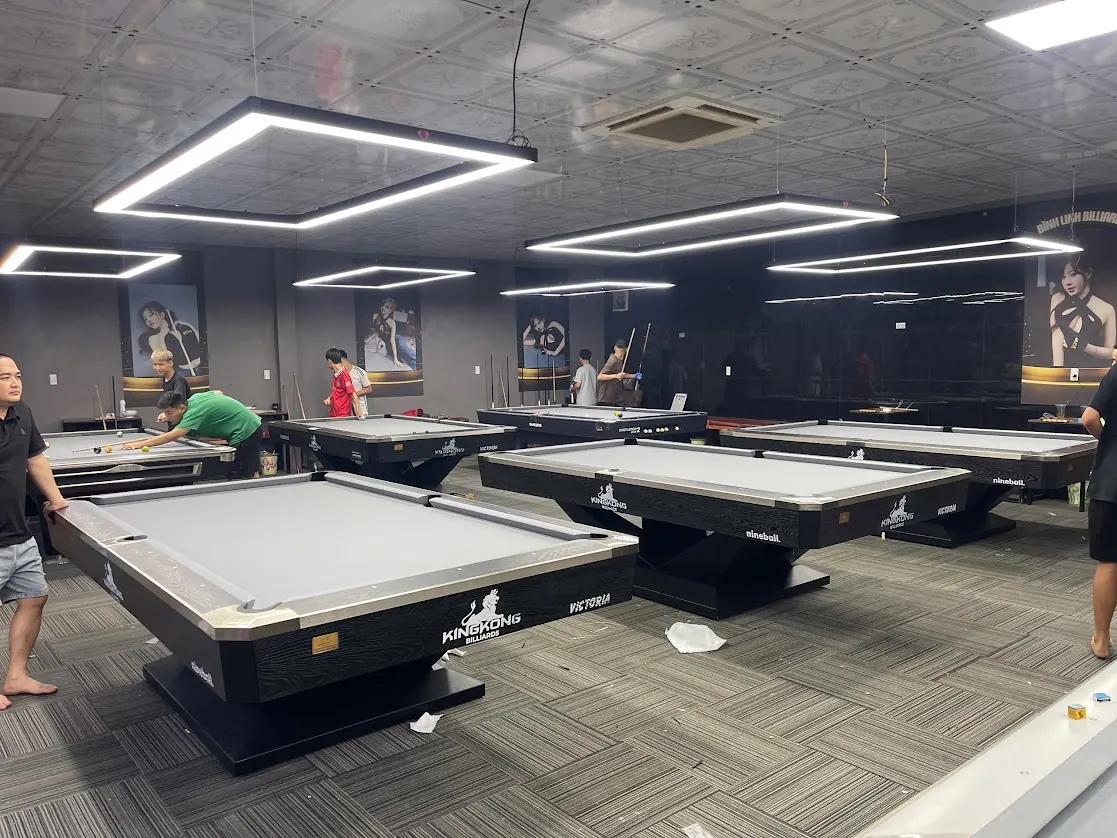
Factory-direct tables arrive as cartons by part (apron, rails, legs, frame) with the slate on its own pallet. A pool table installer assembles, levels and clothes each table on site. Book the installer before the container lands; a crew typically sets up several tables a day.
Leave time for the slowest step. Production at our factory is 10–30 days after the sample is approved, then ocean freight and customs. Order early enough that tables are in place before you start marketing your opening.
6. Checklist before you sign
- Floor plan with the table layout drawn on it.
- Size mix: how many 9 ft, 8 ft and 7 ft.
- Slate thickness, cushion brand and cloth written into the quote.
- One sample table approved, in person or by video.
- Warranty terms in writing (ours: 3 years on frame and slate).
- Spare rails, cushions and cloth ordered with the tables.
- Installer booked for the week the container arrives.
If you are planning a hall with ten or more tables, send us your floor plan. We will send back a layout, a price per table and a loading plan. See pool tables for pool halls for our lines and terms.
Quick answers
How many pool tables does a pool hall need?
It depends on the floor. A 9 ft table needs about 5.5 × 4.2 m including a cue's length of clearance. Planning guides often assume 10 to 20 tables for a US pool hall.
How much room does a 9 ft pool table need?
With a 58 in cue on each side, about 18 × 13.8 ft (5.5 × 4.2 m) for one table.
Can I buy pool tables direct from a factory for my club?
Yes. At ten or more tables, buying direct is practical. QP Billiards fits out clubs from 10 tables with your club's branding.